Martyr · 2 min read
St. Glyceria
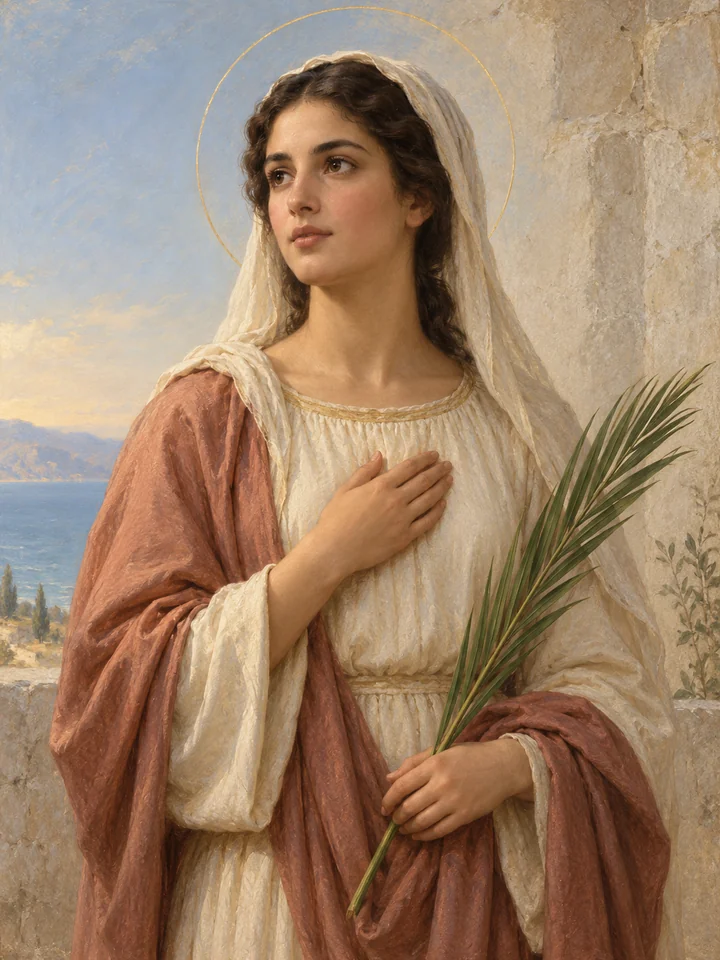
Saint Glyceria was a Roman virgin of the early church.
Listen to this story with read-aloud →
Feast day: 13 May
In this story
Saint Glyceria (Γλυκερία; died c. 177) was a Roman virgin of the early church.
According to Christian tradition, she was forced to pay tribute to a stone statue of Jupiter but it was destroyed while she stood before it. The virgin was imprisoned for this, then sentenced to be torn apart by wild animals. She, however, was not torn apart. Before the animals could render her any harm, Glyceria died a virgin martyr in Heraclea. Her relics reputedly poured forth the substance known as the Oil of Saints, and her name means "sweetness". Theophylact Simocatta and John of Nikiu report that the flow of sacred oil was temporarily stopped when a silver basin which was used for witchcraft by a man named Paulinus was used to receive it. This event led to Paulinus and his sons execution and removal of the bowl at which time the oil resumed flowing.
She is primarily recognized as a saint in Eastern Christianity and the Catholic Church. Her feast day is 13 May in Eastern Orthodox liturgics.
The surviving historical record
The surviving biographical account of this saint is brief. It does not establish a complete chronology of childhood, family life, and daily activities. This page includes the available account rather than supplying imagined conversations or undocumented events. Where the account reports a tradition, it should be read as a tradition, not as a modern eyewitness record.
Biography adapted from Wikipedia contributors under CC BY-SA 4.0. Read attribution and adaptation details.